
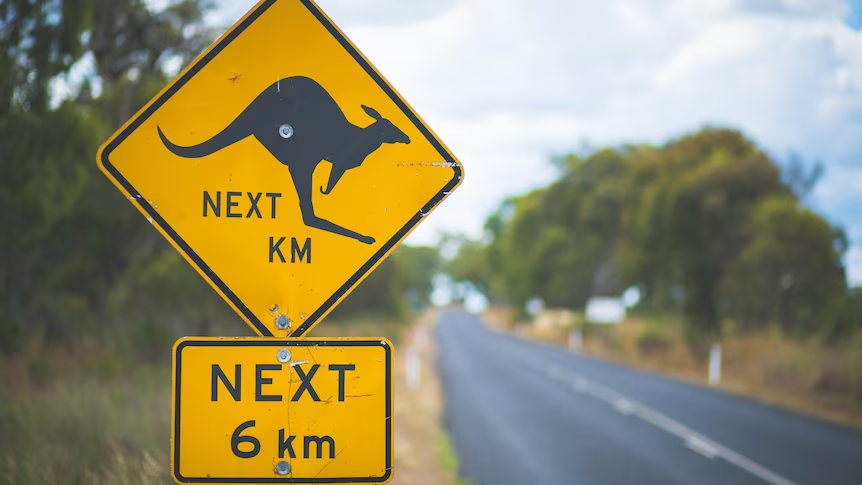
Animal collisions aren’t new on Australian roads — but the frequency and cost of claims are rising fast, and it’s starting to expose gaps in how motor insurance for animal collisions is structured and understood.
Recent data from NRMA Insurance shows a sharp increase in wildlife-related incidents, with over 12,000 claims recorded in a single year and a significant spike in recent periods. Even more telling, kangaroos account for the overwhelming majority of collisions, particularly in regional and semi-rural areas.
This isn’t just a seasonal issue. It’s a growing, structural risk — and one that is becoming increasingly relevant for businesses managing fleets and vehicles across Australia.
Why Animal Collisions Are Becoming a Business Risk
For many organisations, animal collisions and motor insurance risk don’t sit high on the priority list. They’re often seen as isolated incidents rather than a consistent operational exposure.
In reality, the impact can be significant:
- Vehicles written off or out of action for extended periods
- Disruption to supply chains or service delivery
- Unexpected out-of-pocket costs, including excess and downtime
- Safety implications for drivers
Unlike typical road incidents, animal collisions often involve no third party. This changes how claims are assessed, recovered, and classified — and it can have a direct impact on insurance outcomes.
Where Motor Insurance for Animal Collisions Can Fall Short
Not all policies respond the same way to animal collisions in motor insurance.
While comprehensive cover generally includes damage caused by animals, the outcome of a claim can vary depending on how the policy is structured.
Key variables include:
- Policy type (comprehensive vs third party)
- Excess levels and structures
- Hire car or downtime provisions
- Claims classification (at-fault vs not-at-fault)
For example, some insurers may classify an animal strike as an at-fault claim, even when the driver had no ability to avoid the collision. This can influence premiums, claims history, and future insurance costs.
For businesses relying on vehicles — particularly in regional Australia — these distinctions are more than technical details. They directly affect financial exposure.
The Real Cost of Animal Collisions: Downtime
The most significant cost of animal collision motor insurance claims is often not the repair — it’s the disruption.
When a vehicle is off the road, the questions quickly become operational:
- Can work continue without interruption?
- Is there access to a replacement vehicle?
- Who absorbs the cost of delays or missed commitments?
In logistics, trade services, and regional operations, even short periods of downtime can have a cascading effect.
Many standard motor insurance policies focus on repair costs but offer limited support for operational disruption. This is where gaps in coverage often become most visible.
Why Animal Collisions Are Increasing
The rise in animal collisions isn’t random — it reflects broader environmental and operational trends.
Key drivers include:
- Changing environmental conditions pushing wildlife closer to roads
- Increased regional travel and logistics activity
- Expansion of infrastructure into wildlife habitats
- Seasonal movement patterns, particularly at dawn and dusk
For businesses operating in high-exposure areas, this means animal collisions are becoming a predictable risk, not an occasional one.
Fleet Exposure and Business Operations
For businesses with multiple vehicles, the risk compounds.
A single incident may be manageable — but repeated animal collision insurance claims can lead to:
- Increased premiums across the fleet
- Reduced insurer appetite
- Higher excess requirements
- Greater scrutiny at renewal
This makes it important to view animal collisions as a fleet-level risk, rather than a series of isolated events.
What Businesses Should Be Reviewing
Rather than assuming coverage is sufficient, businesses should be actively reviewing how their motor insurance responds to animal collisions.
Key questions include:
- Does the policy explicitly cover animal collisions?
- How are these claims classified?
- What impact do claims have on premiums?
- Is downtime or replacement vehicle cover included?
- Are vehicles operating in higher-risk regions?
These questions help identify whether your insurance reflects real-world operating conditions — not just policy wording.
A More Practical Approach to Risk
Managing animal collision risk in motor insurance isn’t about eliminating the exposure — that’s not realistic.
Instead, it’s about understanding where the pressure points are:
- Where vehicles are most exposed
- How frequently incidents are occurring
- How policies respond in practice
- What operational backup exists
This allows businesses to make more informed decisions around both risk management and insurance structure.
Where Barrack Adds Value
At Barrack, the focus is on identifying how risk behaves in the real world — not just how it appears on paper.
Animal collision claims are a clear example of where:
- Risk is common but underestimated
- Policy response can vary
- Operational impact can outweigh repair cost
By reviewing both exposure and coverage, businesses gain a clearer understanding of how their motor insurance performs under pressure.
Don’t Wait for a Claim to Find the Gap
If your business relies on vehicles — especially in regional or high-exposure areas — now is the time to review your cover.
Animal collisions and motor insurance risk are becoming more frequent, more costly, and more complex to manage.
Ensuring your policy reflects that reality can make a significant difference when it matters most.
Talk to Barrack about your motor insurance program and make sure it’s built for real-world risk — not just what’s expected on paper.